
How the CFMEU’s wish list became Labor policy

Listen to this article
5 min

The CFMEU flag flies from a crane line at a Sydney construction site. Picture: NewsWire / John Appleyard
12 hours ago
In 2018, the CFMEU produced a manifesto with the ambitious title Goodbye Neoliberalism. It contained 18 sweeping recommendations for reshaping Australia’s economy – from removing restrictions on bargaining to tying government contracts to union membership.
At the time many observers dismissed it as a fantasy wish list of CFMEU radicalism but, eight years on, more than half of those 18 recommendations have been partially or fully implemented since the Albanese government took office in 2022. The government appears to be steadily making its way through the CFMEU’s wish list, which has been quietly removed from the internet. The items not yet ticked off should be read as a warning of what is still to come.
First to go was the Australian Building and Construction Commission and the Registered Organisations Commission, the watchdog bodies the CFMEU despised above almost all else, abolished through the Secure Jobs, Better Pay Act 2022. That same legislation created multi-employer bargaining that allows unions to drag several businesses into a single negotiation regardless of their individual circumstances.
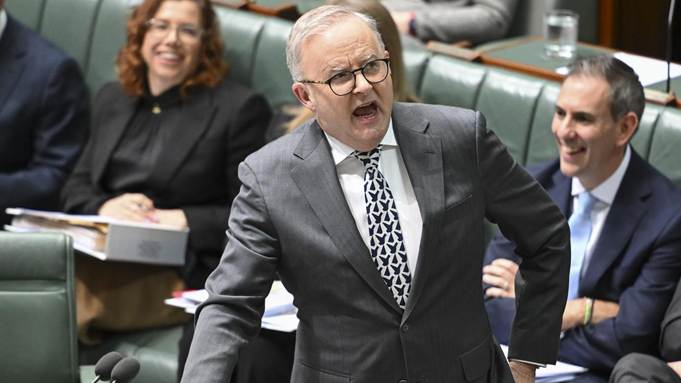
Anthony Albanese during Question Time at Parliament House in Canberra. Picture: NewsWire / Martin Ollman
The demand of the CFMEU that it and other unions be given a licence to meddle in people’s superannuation claims has been introduced through the National Employment Standards.
The CFMEU’s demands about contractors and casuals have been delivered by the Closing Loopholes Acts almost word for word. Those laws raised the bar for companies to prove a worker is a genuine contractor and changed the way casuals are defined and engaged, with a steep increase in penalties for getting it wrong.
The calls to impose new penalty rates burdens became one of the government’s central promises at the last election, delivered in full in 2025.
The latest tick on the CFMEU’s wish list is the recently introduced Workplace Relations Legislation Amendment (Building Co-operative Workplaces No. 1) Bill. The government’s media release promoted the bill as being a series of changes to “bolster the Fair Work Commission”. However, buried within the bill was a nasty provision that somehow didn’t make the title of the media release.
This provision, key among the CFMEU’s 2018 demands, allows the government to discriminate against businesses that don’t have union-endorsed agreements in procurement and grant selection processes. Not only does the legislation allow the commonwealth to discriminate, it actively encourages discrimination against businesses that don’t have union agreements in order to increase the number of such agreements.
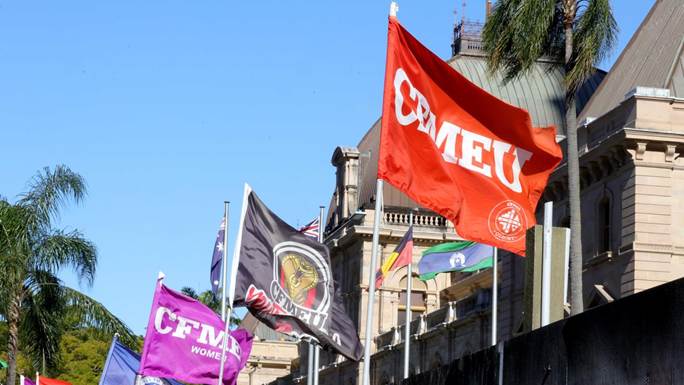
Queens Wharf construction site, Brisbane.
There are nearly one million employing businesses in Australia that operate without a union-negotiated enterprise agreement. This legislation marks every one of them as a second-class citizen in the eyes of the commonwealth, pushing them out of consideration and out of important opportunities and revenue streams.
The national accounts, released at the same time as this bill, showed weak growth, falling productivity and continued pressure on living standards.
When Australia’s economic performance depends on improving competitiveness and efficiency, policy settings are moving in the opposite direction.
If procurement decisions are influenced by industrial considerations rather than value for money, the consequences are reduced competition, higher costs and a less productive economy.
The government’s industrial relations agenda has followed to a remarkable extent what the CFMEU demanded in 2018. The government can try to dress these “reforms” in the language of fairness, but it is not fair that more and more power is being ceded to the CFMEU, even as allegations of corruption and intimidation were exposed two years ago.
It’s hard to know when the government will stop implementing the CFMEU’s wish list. Recommendations not yet acted on include that “corporate or payroll tax rates should vary based on whether a company is unionised” and requiring employers sponsoring migrants to have a union agreement.

Andrew McKellar holding a press conference in the Mural Hall at Parliament House. Picture: NewsWire / Martin Ollman.
It also recommended encouraging superannuation funds to “promote unionism and direct their investments accordingly”.
If the government is happy to implement one half of the CFMEU’s wish list, what is stopping it from going further? The government must rule this out.
Every business, and indeed every person who thinks Australia needs a healthy economy, should be concerned with this systematic use of government power to bolster the powers of union bosses at the expense of business flexibility and economic productivity.
The first-term changes made to the Fair Work laws, by any measure, were complex and far-reaching. Australian businesses have really had no choice but to do their best to comply and adapt to a system that is so complicated and onerous that even the federal department responsible for workplace and employment conditions has got it wrong and underpaid staff.
But there is a limit to how much regulatory reordering can happen before investment decisions change, hiring slows and productivity suffers. Australian businesses and taxpayers simply shouldn’t have to suffer the consequences of a law that exists solely to advance union interests at everyone else’s expense.
Andrew McKellar is chief executive of the Australian Chamber of Commerce and Industry.